BRRRR on Zillow: How to Analyze Value-Add Deals Without Leaving the Listing
A practical framework for finding, underwriting, and comparing BRRRR properties on Zillow using Realy's instant cap rate and cash-on-cash calculations.
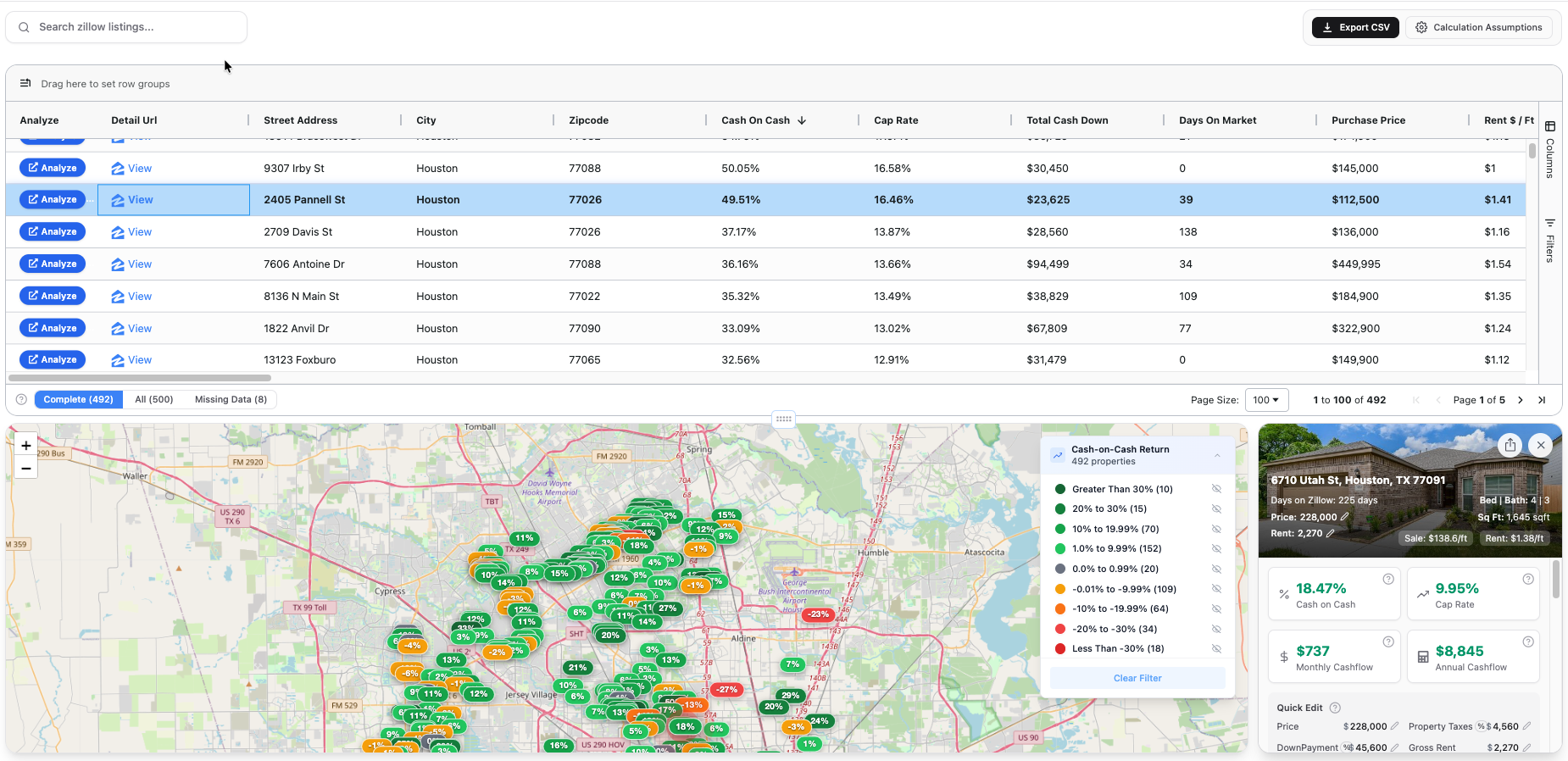
The BRRRR strategy (Buy, Rehab, Rent, Refinance, Repeat) is one of the fastest ways to scale a rental portfolio without leaving all your capital trapped in each deal.
The challenge on Zillow is not finding distressed listings. It is underwriting them fast enough to make competitive offers before other investors do.
This guide walks through how to spot BRRRR candidates on Zillow and how Realy helps you model after-repair value (ARV), rent, and returns without switching tabs.
What Makes a Strong BRRRR Listing on Zillow
Look for properties where the gap between as-is price and stabilized value is large enough to cover:
- Purchase and closing costs
- Renovation budget with contingency
- Holding costs during rehab
- Refinance fees
- A cash-out amount that returns most (or all) of your capital
Common Zillow signals:
- Dated kitchens and bathrooms in solid locations
- Below-market price per square foot for the neighborhood
- Long days on market with price reductions
- Seller language: "handyman special," "investor opportunity," "cash preferred"
- Rent-ready comps nearby at materially higher monthly rents
If the listing photos scream deferred maintenance but the map location is strong, add it to your BRRRR watchlist.
The Five BRRRR Numbers to Model Before You Offer
1. As-Is Purchase Price
Your starting basis. On Zillow this is the list price, or your expected offer if the home has been sitting.
2. Rehab Budget
Itemize labor and materials. Always include contingency (10–20% for older homes).
All-In Basis = Purchase Price + Closing Costs + Rehab + Holding Costs
3. After-Repair Rent
Use comps for renovated homes, not distressed listings. Realy lets you adjust rent assumptions per property.
4. Stabilized NOI and Cap Rate
After rehab, calculate NOI with realistic expenses:
NOI = Annual Rent − Operating Expenses
Cap Rate = NOI ÷ ARV
Many BRRRR investors want stabilized cap rate in a target band (often 6–8%+) depending on market.
5. Post-Refinance Cash-on-Cash
After refinance, your cash left in the deal determines how fast you can repeat:
Cash-on-Cash = Annual Cash Flow After Refi ÷ Remaining Cash in Deal
The goal is to recycle capital, often aiming to leave little to none in the property while staying cash-flow positive.
A Simple BRRRR Example (Numbers You Can Replicate)
| Line item | Amount |
|---|---|
| Purchase price | $165,000 |
| Closing + holding | $12,000 |
| Rehab (with contingency) | $45,000 |
| All-in cost | $222,000 |
| ARV after rehab | $265,000 |
| Stabilized rent | $1,850/mo |
| Annual NOI (est.) | $14,200 |
| Stabilized cap rate | ~5.4% |
| Refi at 75% LTV | $198,750 loan |
| Cash left in deal (target) | Low, ideally minimal |
If monthly cash flow after refi is positive and you recovered most of your cash, you are positioned to repeat. If not, negotiate purchase price or reduce rehab scope.
Realy helps you stress-test these scenarios on the actual Zillow listing while assumptions are fresh.
How to Use Realy During a Zillow BRRRR Screen
- Open the listing on Zillow with Realy enabled.
- Set conservative rent based on renovated comps.
- Increase expense assumptions for older assets (maintenance, capex).
- Model financing with your real down payment and rate.
- Check cash flow and CoC at as-is vs. stabilized rent (if you adjust inputs).
- Reject fast if the deal does not clear your minimum return.
Speed matters. Investors who underwrite in minutes, not days, win more assignments.
BRRRR vs. Turnkey: Know Which Zillow Listings to Skip
Not every Zillow rental is a BRRRR candidate.
| Strategy | Best for | Skip when |
|---|---|---|
| BRRRR | Forced equity, capital recycle | Thin ARV spread, bad location |
| Turnkey | Passive cash flow | Heavy rehab needed, unclear rent |
| Long-term hold | Stable cash flow + appreciation | Negative cash flow at realistic rates |
Realy shows cash flow and CoC immediately so you do not force a BRRRR thesis on a turnkey property, or vice versa.
Due Diligence After the Numbers Look Good
Realy gets you to "worth a deeper look." Before you buy, confirm:
- ARV with a local agent or appraiser mindset
- Rehab scope with a contractor walkthrough
- Rent with property manager input
- Insurance and tax quotes (not estimates)
- Title, zoning, and permit history
The extension narrows your funnel; your team validates the winner.
Common BRRRR Mistakes on Zillow
- Overestimating ARV from one aggressive comp
- Underestimating rehab on 1960s–1980s housing stock
- Using distressed rents instead of post-renovation rents
- Ignoring refinance seasoning and lender requirements
- Skipping holding cost during rehab months
Build margin into every input. If the deal only works with perfect execution, pass.
Final Thoughts
BRRRR on Zillow is a numbers game played at browsing speed. The investors who scale are not luckier; they are faster at eliminating bad deals and modeling good ones.
Realy brings cap rate, cash flow, and cash-on-cash return to the listing page so you can run BRRRR screens where you already hunt for properties.
Install Realy, open your next distressed Zillow listing, and model the full BRRRR path before your competition finishes their spreadsheet.
Ready to analyze deals faster?
Download Realy for free, or share this with an investor friend.