Cap Rate vs Cash-on-Cash Return: Which Matters More?
Cap rate and cash-on-cash measure different things. Learn when each metric wins, how Realy calculates both on Zillow, and which to prioritize for your investing strategy.
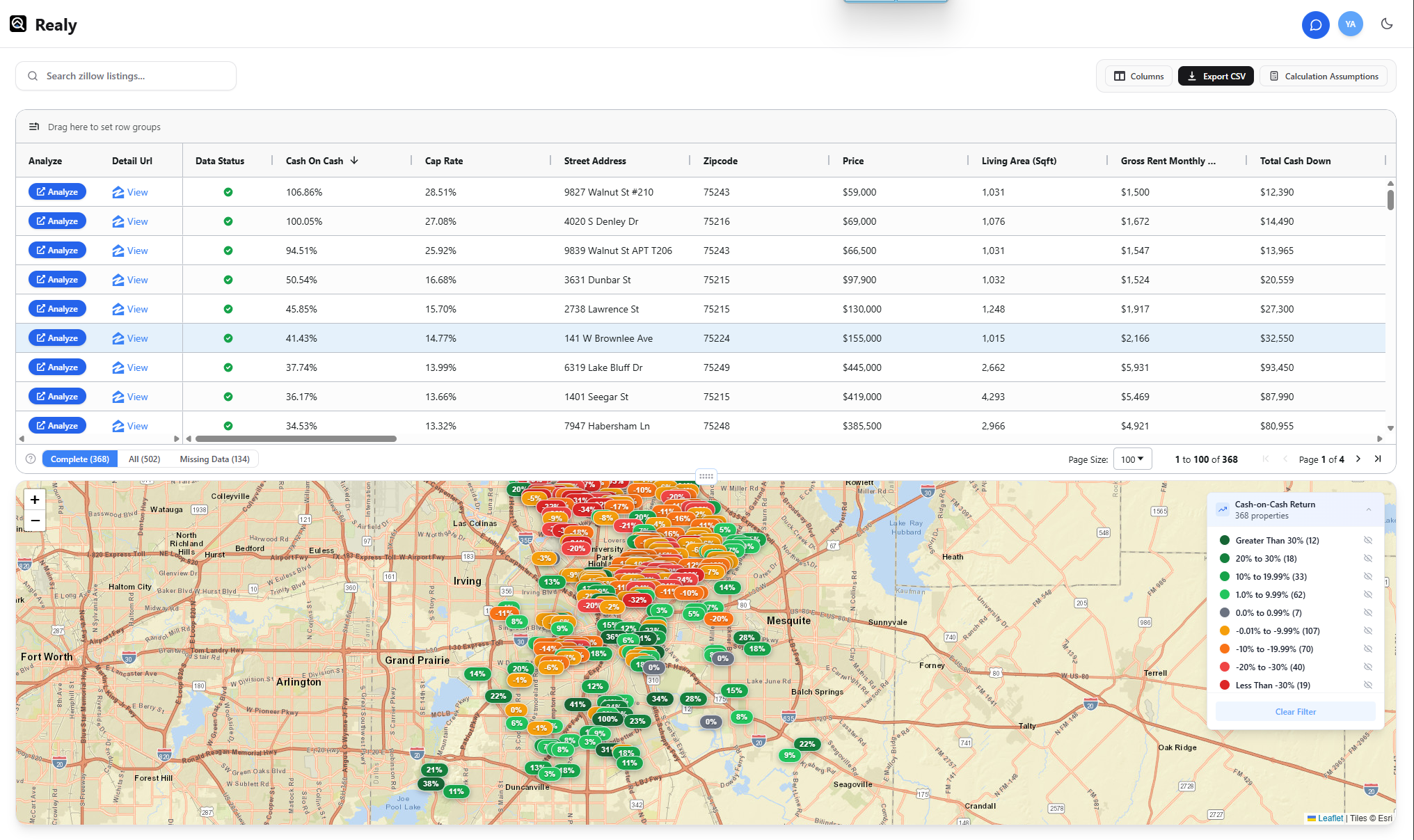
Investors argue about cap rate vs cash-on-cash constantly. The answer is not "one is better"; they answer different questions. Realy shows both on every Zillow listing so you can use each where it fits.
Side-by-Side Comparison
| Cap Rate | Cash-on-Cash Return | |
|---|---|---|
| Formula | NOI ÷ Purchase Price | Annual Cash Flow ÷ Total Cash Invested |
| Includes mortgage? | No | Yes |
| Measures | Property quality (unlevered) | Return on your cash (levered) |
| Best for | Comparing deals apples-to-apples | Portfolio yield, living off cash flow |
| Blind spot | Ignores financing terms | Sensitive to down payment & rate |
How Realy Calculates Each
From Realy's calculation engine:
Effective Gross Income = Annual Rents − Vacancy Loss
NOI (netAnnualIncome) = Effective Gross Income − Operating Expenses

Cap Rate = NOI ÷ Purchase Price
Loaded Cap Rate = NOI ÷ Total Property Cost

Annual Cash Flow = NOI − Annual Mortgage
Cash-on-Cash = Annual Cash Flow ÷ Total Cash Down
Operating expenses = taxes + insurance + maintenance + HOA + management + utilities + other. Mortgage is never in NOI. It sits below NOI as debt service.
When Cap Rate Matters More
Prioritize cap rate when:
- Comparing properties in the same market with similar financing
- Evaluating an all-cash or low-leverage purchase
- Screening dozens of listings quickly (sort by cap in Realy's table view)
- Building a value-add thesis: stabilized cap rate after rehab tells you exit quality
Example: Two $180K homes both rent for $1,600/mo, but one has $400/mo HOA. Cap rate exposes the HOA drag before you model your specific loan.
When Cash-on-Cash Matters More
Prioritize CoC when:
- You invest with a mortgage (most investors do)
- You need monthly income to hit a target ($500+/door)
- You're comparing leverage strategies (20% vs 25% down)
- You're deciding if a deal beats your hurdle rate (e.g., 8% CoC minimum)
Example: A 5% cap property at 25% down with a great rate can still deliver 9% CoC. Cap rate alone would make you pass.
Same Deal, Both Metrics
$155,000 purchase · $2,166/mo rent · 20% down · 6.5% · 30Y · 2% tax (Realy defaults, minimal other expenses):
| Metric | Approx. value |
|---|---|
| Cap rate | ~14.8% |
| Cash-on-cash | ~41.4% |
| Monthly cash flow | ~$1,124 |
Leverage amplifies CoC above cap rate when cash flow is positive. If expenses rise (insurance, vacancy), CoC compresses first.
Which Should You Optimize For?
| Strategy | Lead metric | Secondary |
|---|---|---|
| Cash-flow hold | Cash-on-cash | Cap rate floor |
| BRRRR / value-add | Stabilized cap rate | Post-refi CoC |
| Appreciation play | Cap rate (context) | CoC break-even check |
| First rental | CoC + monthly CF | Cap rate sanity check |
Most rental investors set a minimum CoC and a minimum cap rate floor, then require both to pass.
Use Both on Zillow Without Switching Tabs
Realy displays cap rate and cash-on-cash on:
- Zillow search analyzer (table + map)
- Listing mini side panel
- Full Realy.app analytics view
Adjust assumptions once; both metrics recalculate together.
Related: What is a good cap rate? · Cash-on-cash formula
Ready to analyze deals faster?
Download Realy for free, or share this with an investor friend.