When a High Cap Rate Is a Trap (Insurance, HOA, Vacancy)
Why unusually high cap rates on Zillow often mislead investors: hidden expenses, optimistic rent, and how to stress-test deals in Realy before you buy.
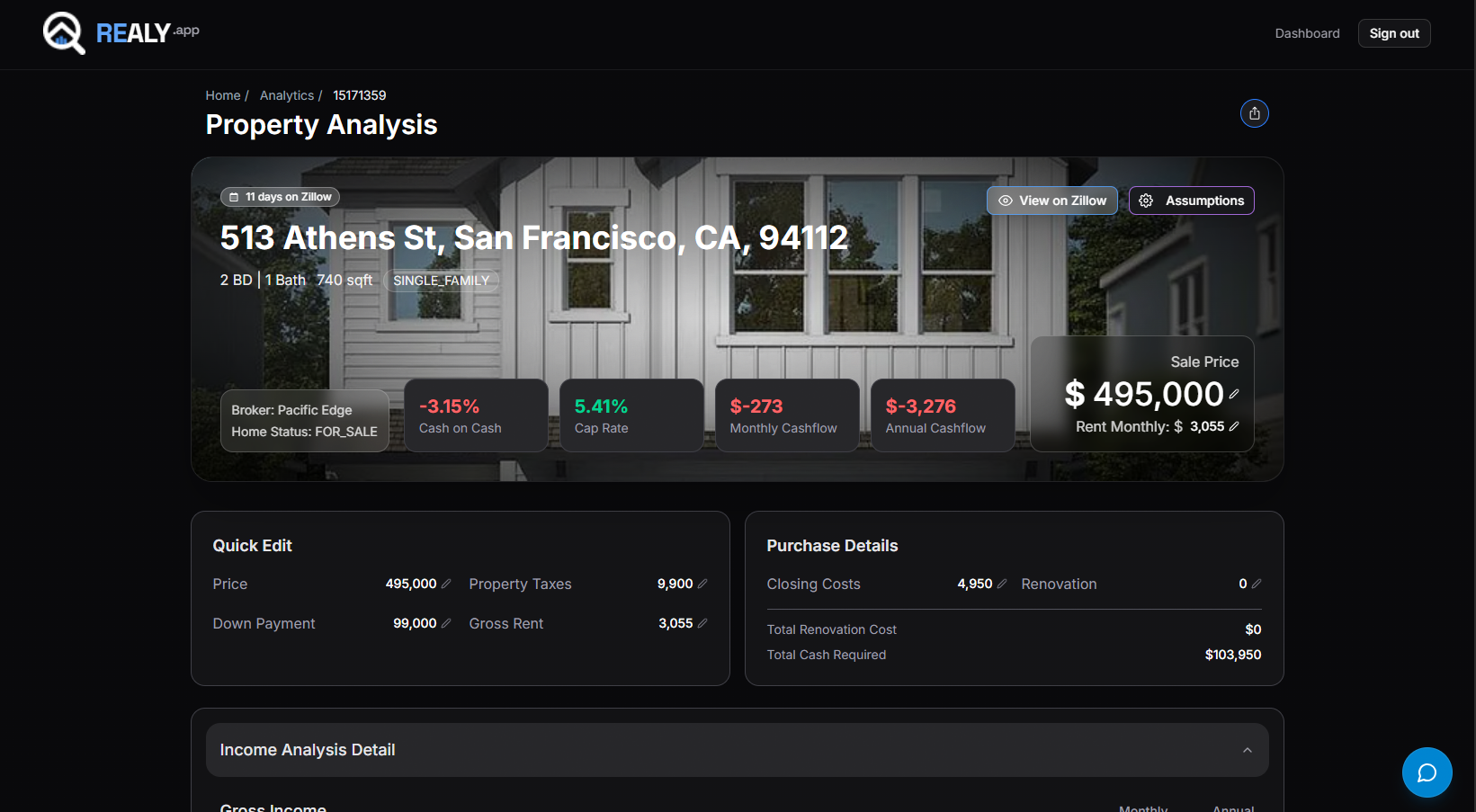
A 25% cap rate on Zillow should make you more skeptical, not more excited. Extreme cap rates usually mean missing expenses, bad rent data, or a property the market is pricing for risk, not a secret gift.
How Cap Rate Gets Inflated
Realy calculates:
Cap Rate = NOI ÷ Purchase Price
NOI = Effective Gross Income − Total Operating Expenses
Cap rate looks huge when:
- Operating expenses are under modeled
- Rent is over estimated
- Purchase price reflects hidden problems
Trap #1: Zero Insurance
Scenario: $59K condo, $1,500/mo rent, $0 insurance in assumptions.
Texas hail, wind, and investor policies aren't free. Expect $800–2,000+/yr on many SFRs; condos need master + HO-6.
Impact example:
| Model | Insurance | NOI | Cap rate |
|---|---|---|---|
| Default | $0 | $16,820 | 28.5% |
| Realistic | $1,200 | $15,620 | 26.5% |
Still high, but direction matters. On larger deals, insurance swings are $2,000–4,000/yr.
Fix in Realy: Insurance → $ Yearly Amount or $ Per Home Sqft Monthly.
Trap #2: Missing HOA (Condos & Townhomes)
Scenario: 75201 downtown condo showing 17% cap with $0 HOA.
Real HOAs: $400–800+/mo ($4,800–9,600/yr).
NOI drop of $6,000/yr on $325K purchase ≈ 1.8% cap rate lost
A 17% cap can become 15%, or worse if special assessments pending.
Fix: Get HOA demand statement; enter monthly HOA in Realy.
Trap #3: Zero Vacancy
Realy models vacancy as:
vacancyLoss = grossMonthlyIncome × vacancyMonths
effectiveGrossIncome = annualRents − vacancyLoss
0 months vacancy assumes perfect occupancy forever.
| Vacancy | On $1,800/mo rent | Annual hit |
|---|---|---|
| 1 month | 1 mo | $1,800 |
| 8% | ~0.96 mo | ~$1,728 |
Fix: Set 1 month minimum (8–10% for rougher areas).
Trap #4: No Maintenance Reserve
Default maintenance = $0. Older Texas stock needs:
- 5–10% of rent (ongoing)
- Or $1,500–3,000/yr minimum reserve
On $18,000/yr rent, 8% maintenance = $1,440/yr off NOI.
Trap #5: Optimistic Rent Zestimate
Cap rate uses income at the top of the P&L. Inflate rent 15% → inflate NOI 15% → inflate cap rate proportionally.
Fix: Comp rent; override in Realy. See red flag #1.
Trap #6: Price Reflects Risk You Haven't Modeled
Sub-$100K SFRs in high-crime pockets show astronomical cap rates because:
- Market prices in vacancy and tenant damage
- Insurance may be unavailable or expensive
- Appreciation may be negative
The cap rate isn't free money. It's compensation for risk you must accept consciously.
Stress Test Template (Realy)
Start with listing defaults, then apply stress profile:
| Line item | Stress value |
|---|---|
| Vacancy | 1–1.5 months |
| Insurance | Actual quote or $1,500+ |
| Maintenance | 8% of gross rent |
| Management | 8% of gross rent |
| HOA | Actual (if applicable) |
| Rent | Comp average (not max) |
Re-run cap rate and CoC.
If the deal still clears your hurdle (2026 CoC targets), proceed to inspection.
If it fails, the high cap rate was a trap.
Worked Example: High-CoC Texas Listing
9827 Walnut St #210 (Dallas sample; compare live Texas rankings in Houston top 10):
| Profile | Cap rate | CoC |
|---|---|---|
| Lean defaults | ~28.5% | ~107% |
| + insurance, vacancy, maint, mgmt | ~18–22% est. | ~40–60% est. |
| + HOA $250/mo (if applicable) | Lower still | Lower still |
Still potentially viable, but a different investment than the headline number.
Rule of Thumb
If cap rate is 10%+ above market average for that zip, assume a trap until proven otherwise.
Market average: run Realy on full Zillow search, median cap rate for similar types.
Don't Skip the Stress Test
Install Realy → open listing → calculator icon → apply stress profile → check if deal survives.
Related: What is a good cap rate? · Texas tax traps · 10 red flags
Ready to analyze deals faster?
Download Realy for free, or share this with an investor friend.